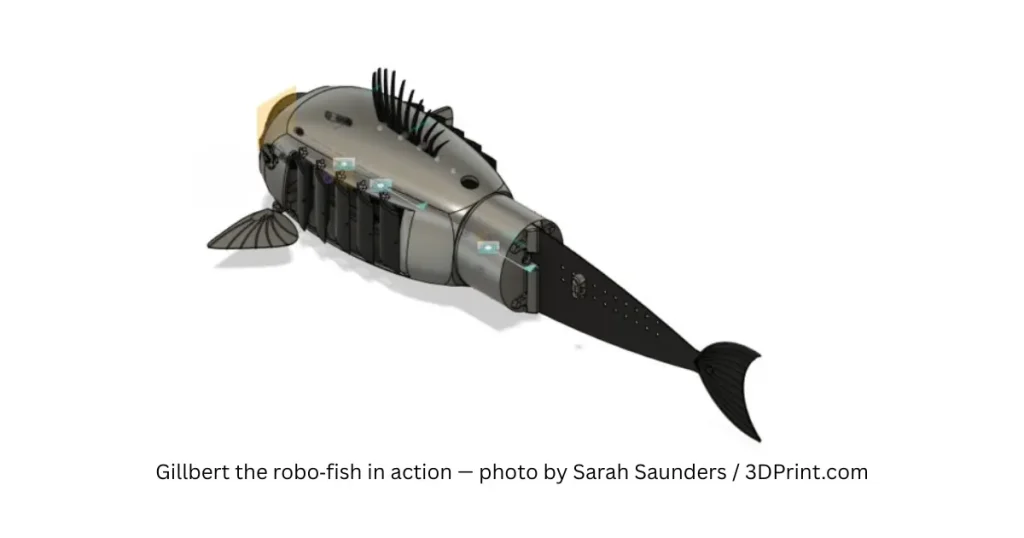
I came across a headline recently about a robotic fish designed to “eat” microplastics in the ocean.

At first I thought… okay, that sounds like sci-fi. But the more I looked into it, the more interesting it got. If something like this actually works at scale, it could be one of the more creative approaches to dealing with the plastic pollution problem.
The article that caught my attention described a soft robotic fish that swims through water and absorbs microplastics the way plankton feeders do. The idea is simple: instead of trying to filter entire oceans, create small autonomous collectors that move through contaminated areas and capture particles.
But the real question is the same one I ask with most environmental tech news:
Is this actually a meaningful solution… or just a cool prototype?
Let’s unpack what’s going on.
What Problem Is This Robot Fish Trying to Solve?
Microplastics are one of the hardest forms of pollution to deal with.
Unlike large plastic debris that can be physically removed, microplastics are tiny particles, often smaller than 5 millimeters, that spread through water, soil, and even the air.
They come from several sources:
- Breaking down of larger plastics
- Synthetic clothing fibers
- Tire wear
- Plastic packaging
- Personal care products
- Industrial waste
Once they’re in the water, they’re extremely difficult to remove.
Fish, plankton, and marine organisms ingest them. Those particles then move up the food chain, eventually reaching humans and animals.
That’s part of why there’s growing interest in technologies that could capture microplastics directly from water systems.
What Exactly Is This Robotic Fish?
Researchers developed a small soft robotic fish that can swim and absorb microplastic particles.
The design mimics how some marine animals feed.
Instead of teeth or nets, the robot uses a soft porous material that attracts and traps microplastic particles while it moves through the water.
From what’s been reported about the prototype:
- It’s around 13 mm long
- It moves through water using flexible fins
- The body is made from a polyurethane material designed to attract plastic particles
- It can collect microplastics while swimming
The idea is that large numbers of these small robots could eventually operate in polluted waterways, gathering microplastics before they disperse further.
At least conceptually, it’s similar to how nature solves the problem. Plankton feeders don’t clean the whole ocean. They simply process particles continuously.
The Mechanism: Why Would Microplastics Stick to It?
The key to the design is the material used in the robot’s body.
Some polymers can be engineered to attract plastic particles through electrostatic interactions or surface chemistry.
Microplastics floating in water often carry electrical charges or surface properties that cause them to cling to certain materials.
So when the robot swims through contaminated water, particles attach to its surface.
In theory:
- The robot moves through water.
- Microplastic particles adhere to the surface.
- The robot can then be collected and cleaned.
But there are still big questions about efficiency.
What This Prototype Does NOT Solve Yet
This is where I always pause with promising environmental tech.
A working prototype does not automatically mean a scalable solution.
Some unanswered questions:
1. Collection scale
The ocean contains trillions of microplastic particles. A few millimeter-sized robots won’t make a dent unless they can be deployed in massive numbers.
2. Energy and control
How would thousands of robotic fish be powered and controlled in open water?
3. Recovery
If the robots collect plastic… they still need to be retrieved and cleaned.
Otherwise you just end up adding more devices into the ecosystem.
4. Environmental safety
Ironically, anything placed in the ocean has to be carefully designed so it doesn’t become another form of debris.
The research is promising, but it’s still early.
Why This Still Matters
Even if robotic fish never clean the entire ocean, technologies like this can still play useful roles.
For example:
- Cleaning high-pollution zones near wastewater outlets
- Targeting industrial discharge points
- Collecting particles in controlled water systems
- Monitoring microplastic concentrations
Those smaller applications might be where this technology actually becomes useful.
A Bigger Reality About Microplastics
Whenever I read about solutions like this, I keep coming back to the same thought.
Cleaning microplastics after they enter the environment is incredibly difficult.
Preventing them in the first place is far more effective.
That means focusing on:
- Reducing plastic packaging
- Improving wastewater filtration
- Limiting microfiber shedding from clothing
- Regulating industrial discharge
- Designing better materials
Cleanup tech is important, but source reduction matters more.
A Personal Reflection
As someone who spends a lot of time looking into contamination risks for pets and households, I’ve noticed something interesting. People often assume pollution problems have some massive technological fix coming.
But most of the time the real solution is much simpler.
It’s reducing exposure at the source.
For households that might mean:
- Filtering drinking water
- Reducing plastic food containers
- Avoiding heavily processed packaging
- Choosing safer materials when possible
Small changes add up.
Practical Takeaways
If you’re concerned about microplastics in daily life, the most practical steps right now are:
- Use a high-quality water filter that reduces microplastics.
- Avoid heating food in plastic containers.
- Choose stainless steel or glass storage where possible.
- Wash synthetic clothing less aggressively (this reduces fiber shedding).
- Support policies and brands reducing plastic packaging.
None of these eliminate exposure entirely. But they can lower it.
What Communities Are Doing About Plastic Pollution
Some regions are already taking action upstream rather than relying on cleanup tech.
Examples include:
- Cities installing advanced wastewater filtration systems
- Bans on microbeads in cosmetics
- Textile research focused on low-shedding fabrics
- Local river clean-up programs targeting plastic waste
Those kinds of efforts may ultimately have more impact than robotic cleanup alone.
Frequently Asked Questions
Can robots actually remove microplastics from the ocean?
Some experimental technologies can capture particles in controlled environments, but large-scale ocean cleanup of microplastics remains extremely challenging.
What are microplastics?
Microplastics are plastic particles smaller than 5 millimeters that form when larger plastics break down or when synthetic fibers and industrial materials enter water systems.
Are microplastics harmful?
Research suggests they may accumulate in animals and humans, but the full health impact is still being studied. Many scientists are concerned about chemical additives and contaminants attached to the particles.
Could robotic fish become a real solution?
Possibly for targeted environments like wastewater systems or polluted waterways. Cleaning the open ocean at scale remains difficult.
What Do You Think?
Would you trust robotic fish cleaning plastic pollution, or does it feel like another “tech fix” that misses the bigger problem?
For more at-home microplastic tests and what I found, check out our full resource: I Tested 4 Cutting Boards for Microplastics.
Leave a Reply