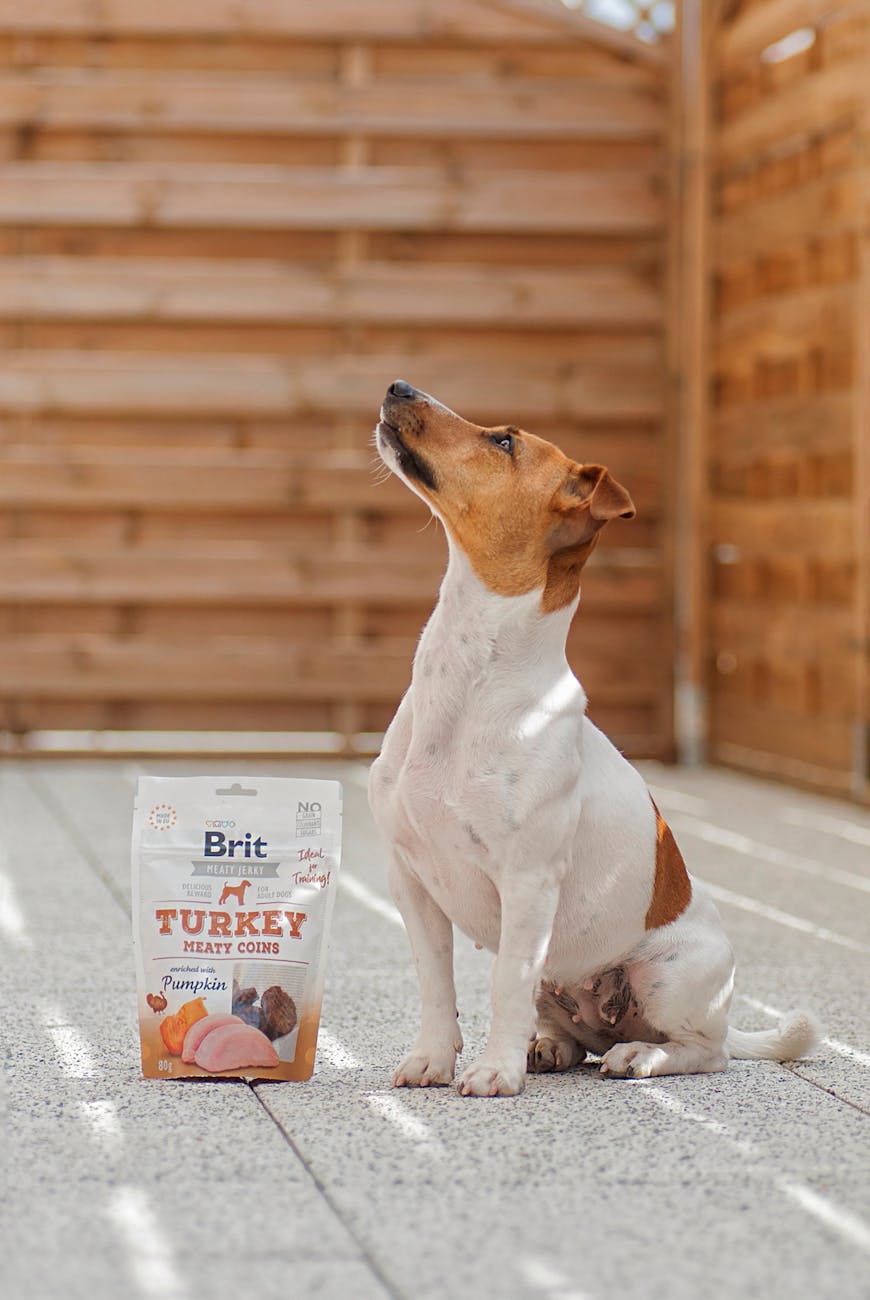
Some pet food bags and treat boxes have used PFAS-based grease‑proofing. The FDA ordered these uses phased out and set June 30, 2025 as the deadline to exhaust remaining stock. But older inventory and labels without disclosure mean exposure can still happen at home—mainly through dust from the bag, not the food itself. Below is a clear plan to shop smarter, store safer, and reduce risk without fear‑mongering. (U.S. Food and Drug Administration)
Why packaging matters for pets
Pet food is oily. That’s exactly why paper bags and paperboard boxes have historically used grease‑resistant treatments—a common place PFAS showed up. These coatings don’t stay put forever; wear and tear can create dust that pets inhale or ingest (think: nose in the bag, licking paws after “helping” you pour). In 2025, FDA’s veterinary division surveyed animal‑food packaging and detected a PFAS marker (6:2 FTOH) in 2 of 57 samples; more importantly, FDA finalized the national phase‑out and set a June 30, 2025 sell‑through deadline for any remaining PFAS-based grease‑proofed paper/board. That’s progress—but not the same as “it’s gone everywhere today.” (U.S. Food and Drug Administration)
Independent testing has also found PFAS in some pet food bags in the past, underscoring why home habits still matter even as regulation catches up. (EWG)
Quick background: What the 2025 FDA move actually did
- What phased out: PFAS‑containing grease‑proofing agents in paper and paperboard for food contact (including pet food bags/boxes).
- Key date: June 30, 2025—deadline to exhaust remaining stocks.
- Reality check: A limited 2024–25 FDA survey shows far fewer positives than historical tests, but not zero. Supply chains are big; some old stock can linger, and labels rarely say “PFAS.” (U.S. Food and Drug Administration)
Two real voices from PFAS‑impacted pet families
- “And then I opened Cesar’s and saw 11,800 parts per trillion and I busted down crying.” — Mike Watters, after seeing PFAS results for his husky in Gray’s Creek, NC. (North Carolina Health News)
- “She was this spunky little thing…” — Audrey Napier remembering her Pomeranian, Chloe; both stories galvanized local testing and treatment advocacy. (North Carolina Health News)
Note: These families were primarily impacted by contaminated water, not packaging—but their experiences are a powerful reminder that pets share our environments and exposures. (NC State News, PMC)
What the latest science and testing say (plain English)
- Pet food packaging has tested positive in the past. NGO testing in 2022 found PFAS in several pet food bags, suggesting grease‑proof coatings were in use. (EWG)
- Peer‑reviewed work exists on PFAS in pet‑food packaging. Academic analyses have detected PFAS/PFAA residues in certain packaging and food samples. Methods and targets vary, so numbers don’t all match—but the signal is there. (ScienceDirect)
- 2025 FDA snapshot: Only 2/57 animal‑food packages screened positive for a PFAS marker, consistent with a market phase‑out underway. Good trajectory—still, not zero. (U.S. Food and Drug Administration)
The exposure pathway at home (how it actually happens)
For most families, the likely exposure from packaging is dust and handling, not the food itself. Dust from coated paper/board can shed during transport, storage, pouring, and scooping. Pets put their faces in bags and lick surfaces; we store bags in pantries where air recirculates. Minimizing dust and contact is the practical lever you control right now. (EWG)
The safer‑feeding, safer‑storage playbook (do these today)
- Keep the original bag—but isolate it. Place the sealed bag inside a rigid bin (stainless or HDPE) to contain dust. Scoop without letting your dog “help.” Save the bag for lot/recall info.
- Decant small amounts. For daily use, pour one week of kibble into a glass or stainless canister; keep the bulk bag/bin closed.
- Don’t let pets chew bags or treat boxes. Treat packaging like you would any potentially coated paper—keep it out of mouths. (EWG)
- Wipe the shelf. After opening a new bag, do a quick damp microfiber wipe of the storage area to remove dust.
- Choose bowls that clean easily. Prefer stainless or ceramic (inspect ceramic for chips); wash daily with hot water and soap. (BluePearl Pet Hospital, todaysveterinarynurse.com)
- Mind your water. If your area has PFAS advisories—or you’re just being proactive—use a filter certified to NSF/ANSI 53 or 58 for PFAS reduction. That protects you and the pet’s water. (NSF)
- Ask brands the right question. Request a dated letter stating “no intentionally added PFAS in any packaging component—paper, board, inks, adhesives, liners, labels.” If they have it, they’ll send it.
Shopping smarter (signals that actually matter)
- Look for “no intentionally added PFAS” language across all packaging layers—not just the paper. Some inks/labels/sealants historically contained fluorinated chemistries. (GlobalPETS)
- Prefer cans from reputable brands if you’re concerned about bags. (Be mindful: can linings address different chemistries; your goal here is reducing overall PFAS contact, not chasing perfection.)
- Skip “compostable‑lined” paper unless verified PFAS‑free. Some “grease‑proof” lines historically relied on fluorinated coatings. Ask for third‑party test data. (Toxic Free Future)
Community angle: Where cities are moving the needle
- Ann Arbor, MI: Continuous PFAS monitoring and investments in treatment to keep finished water within strict targets; the city publishes regular water quality reporting and PFAS dashboards. (City of Ann Arbor, Huron River Watershed Council)
- Cape Fear, NC (Wilmington area): Multi‑year partnership among CFPUA, EPA, and NC DEQ to reduce PFAS via advanced treatment—illustrating how local utilities can drive exposure down for whole regions. (US EPA)
- East Metro, MN: The 3M settlement funds city and home GAC projects across multiple communities—proof that large‑scale remediation happens when communities organize and hold polluters accountable. (3msettlement.state.mn.us, FOX 9 Minneapolis-St. Paul)
Vet‑ and science‑aligned context (don’t skip this)
- Pets are sentinels: studies around Chemours’ plant found elevated PFAS in dogs and horses—even in some dogs that drank only bottled water—highlighting multiple exposure pathways (dust, food‑contact materials, outdoor soils). (NC State News, PMC, WRAL.com)
- Regulation is catching up: U.S. EPA set national PFAS drinking water standards in 2024; standards help, but they don’t remove legacy PFAS already in homes. Your home habits still matter. (NSF)
Strong actions to take this week
- Store smart: Bag‑in‑bin + small weekly decant into glass or stainless.
- Upgrade water: Use an NSF/ANSI 53 or 58‑certified filter for pet and family drinking water.
- Ask brands: Request a “no intentionally added PFAS” letter for all packaging layers (paper, inks, adhesives).
- Control dust: Wipe pantry surfaces after opening new bags; keep pets from mouthing packaging.
- Share locally: If your city publishes PFAS water data, link it in neighborhood groups. Transparency moves markets and policies. (NSF, City of Ann Arbor)
FAQs
Did the FDA “ban” PFAS in pet food packaging?
FDA ended authorization for PFAS‑based grease‑proofing on paper/paperboard and set June 30, 2025 to exhaust old stock. That’s functionally a ban for this use, but some legacy inventory could still circulate near the deadline. (U.S. Food and Drug Administration)
Are kibble bags still risky after 2025?
Risk is lower than a few years ago, but not automatically zero. Ask for brand documentation and keep using bag‑in‑bin storage to control dust. (U.S. Food and Drug Administration)
What bowl materials are safest?
Stainless steel and intact ceramic are easy to clean and durable; avoid letting heavy chewers damage bowls. Wash daily. (BluePearl Pet Hospital, todaysveterinarynurse.com)
Is water a bigger driver than packaging?
Often, yes—especially in impacted regions. Use certified filtration and track local data; packaging habits are a complement, not a replacement. (NSF, City of Ann Arbor)
Storage & serving choices
| Choice | PFAS likelihood (today) | Pros | Cons | Best practice |
|---|---|---|---|---|
| Original paper bag on a pantry shelf | Low–Medium (declining post‑phase‑out, not zero) | Simple, keeps lot data | Possible dust; bag tears | Keep bag sealed; wipe shelf after opening |
| Original bag inside rigid bin (bag‑in‑bin) | Low | Contains dust; preserves lot info | Requires a bin | Preferred; scoop without pet contact |
| Weekly decant to glass/stainless canister | Very low | Clean pour; easy cleaning | Extra step | Keep bulk bag closed; rotate FIFO |
| Treat boxes (paperboard) | Low–Medium (declining) | Convenient | Pets chew boxes; dust | Empty into jar; discard box promptly |
| Stainless or intact ceramic bowls | N/A | Hygienic; durable | Ceramic can chip | Wash daily; replace damaged bowls |
Join the conversation
Have you asked a pet brand for a PFAS‑free packaging letter? Do you use bag‑in‑bin storage or another system that works better? Share your city and your storage setup in the comments so other pet parents can learn from you.
For a complete overview of how PFAS affects pets and what you can do about it, check out our guide: How to Protect Your Pets From PFAS Exposure in Everyday Products.
Sources:
https://www.fda.gov/media/187097/download
https://www.ewg.org/news-insights/news-release/2022/11/new-tests-find-toxic-forever-chemicals-pet-food-bags-and-baby
https://news.ncsu.edu/2023/06/pfas-found-in-blood-of-dogs-horses-living-near-fayetteville-n-c/
https://www.ncbi.nlm.nih.gov/pmc/articles/PMC10802174/
https://www.wral.com/story/study-dogs-horses-near-fayetteville-have-forever-chemicals-in-their-blood/20925170/
https://globalpetindustry.com/article/working-towards-eliminating-pfas-in-pet-food-packaging/
https://www.nsf.org/consumer-resources/articles/pfas-drinking-water
https://www.nsf.org/knowledge-library/forever-chemicals-advancement-filtration-standards
https://www.northcarolinahealthnews.org/2021/05/10/these-pets-have-high-levels-of-forever-chemicals-in-their-blood-has-that-made-them-sick/
https://hrwc.org/our-watershed/threats/pfas-and-the-huron-river/
https://www.a2gov.org/water-treatment-plant/water-quality-data-and-education/pfas/
https://3msettlement.state.mn.us/
Next in the rotating calendar: We’ll move from PFAS‑free products to a practical detox habit—deep‑cleaning routines that reduce PFAS‑laden dust without overdoing chemicals.
Leave a Reply